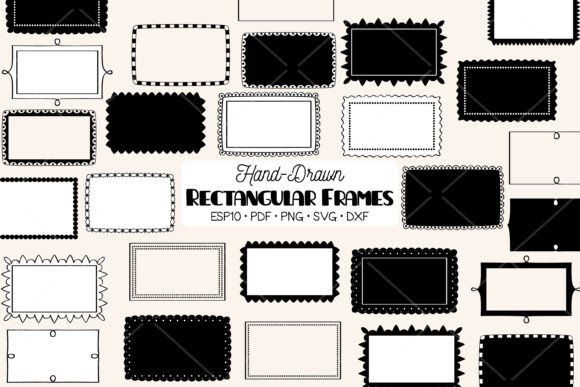
Rectangular Frames Hand Drawn Border
A Designer’s First Glance: Warm, Unfussy, and Quietly Confident
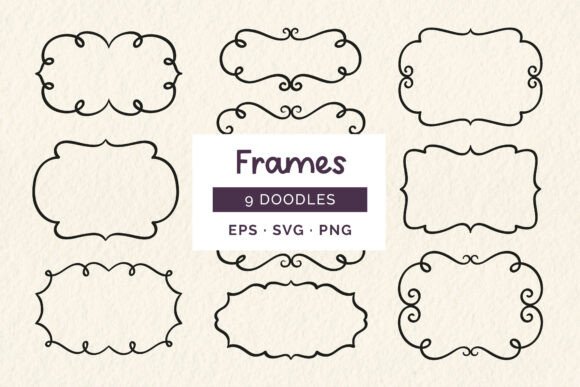
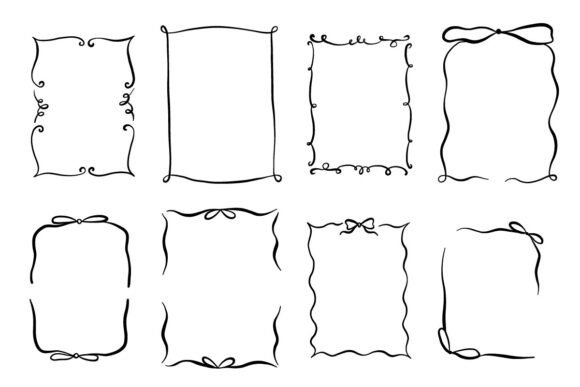
When I opened Rectangular Frames Hand Drawn Border, I didn’t see “clip art.” I saw a quiet invitation — soft lines, intentional imperfection, and a gentle rhythm in the spacing. These aren’t rigid templates; they’re hand-drawn frames with subtle tapering strokes, slight variations in line weight, and breathing room built into every corner. The oblong wreath feels organic, not symmetrical — like something sketched during a coffee break, not generated by algorithm. That human touch is exactly what makes it work for handmade products: it signals care, not convenience.
Real Project Test: A Linen Tote Bag for a Local Bakery
Last week, I used Rectangular Frames Hand Drawn Border to frame a custom bakery monogram on a natural linen tote bag — the kind sold at farmers’ markets and boutique gift shops. I placed the frame centered on the front panel, sized to sit comfortably within a 5” x 7” hoop. The result? Instant cohesion. The border softened the sharpness of the monogram while elevating the whole piece — no extra embellishment needed. Customers noticed it immediately. One said, “It looks like it was made just for them,” which is the gold standard for personalized gifts and small shop merchandise.
Where It Shines (and Where It Asks for Thought)
Rectangular Frames Hand Drawn Border thrives in contexts where authenticity and tactility matter:
- Custom apparel — especially on relaxed-fit sweatshirts, canvas aprons, or unbleached tea towels, where its sketch-like quality harmonizes with fabric texture;
- Baby embroidery — think onesies or burp cloths, where the gentle shape and open layout avoid visual clutter;
- Holiday embroidery — as a framing device for names on stockings or small ornaments, lending heirloom warmth without fuss;
- Embroidered patches — when digitized thoughtfully, the clean outer edges stitch crisply, and inner negative space prevents dense fill-stitch buildup;
- Digital product previews — it layers beautifully over mockups for Etsy listings or printable branding kits, adding craft credibility without competing with core messaging.
What to Watch For Before You Stitch
This isn’t a “drop-in-and-go” machine embroidery design — and that’s its strength. But it does ask for intentionality:
- Hoop size matters. The full rectangular frame needs breathing room. On curved surfaces like caps or tapered pillow covers, consider using only one side or the top arch — not the full perimeter — unless you’ve tested stabilization thoroughly.
- Fabric texture changes everything. On terry cloth or heavy twill, fine interior linework may blur. On thin or stretchy fabric (like lightweight cotton jersey), use cutaway stabilizer and reduce stitch density slightly — especially around corners where satin stitch meets running stitch transitions.
- Dark fabric demands contrast testing. The hand-drawn aesthetic relies on line clarity. If stitching black thread on navy, test first: sometimes a charcoal gray or deep plum thread reads more cleanly than pure black.
- Small lettering inside the frame? Proceed carefully. This set includes monogram-ready space, but tight kerning or tiny fonts can get lost. Keep internal text above 8mm height for reliable legibility after stitching.
How It Shapes Perception — Beyond the Stitch
As a designer who ships hundreds of embroidered items yearly, I pay attention to how a border affects buyer trust. Rectangular Frames Hand Drawn Border quietly communicates craftsmanship — not because it’s complex, but because it’s considered. Unlike vector-perfect borders, it avoids the “digital fatigue” that makes some embroidery feel mass-produced. That difference lifts perceived value: customers are more likely to pay a premium for a baby blanket framed this way versus a generic scalloped edge.
It also supports brand consistency. Whether you’re an Etsy seller building a cohesive line of nursery decor or a craft fair vendor offering personalized kitchen towels, this border acts like a signature — recognizable but never repetitive. Used across multiple products (a matching apron + tea towel + oven mitt set), it becomes part of your visual language without shouting.
Practical Notes from My Embroidery Desk
Before using Rectangular Frames Hand Drawn Border in your next project, here’s what I always do:
- Run a test on scrap fabric — same type, same stabilizer, same thread colors — and hold it up to natural light. Does the line flow? Do corners stitch cleanly?
- Check the digital embroidery file in black-and-white mode. If detail vanishes, simplify or adjust underlay.
- Compare it against both light and dark backgrounds. Some hand-drawn elements recede on busy prints — confirm it holds presence.
- Verify licensing. Since it’s labeled Graphics and marketed for die-cut machines and prints, confirm whether commercial embroidery rights are included before selling finished embroidered products or bundling it into digital embroidery kits.
- Pair it intentionally: use matte thread for a softer look on linen, or high-sheen rayon for pop on cotton sateen. The frame adapts — but only if you guide it.
Final Thought: Not Just a Frame — A Quiet Anchor
Rectangular Frames Hand Drawn Border doesn’t dominate. It grounds. It gives breathing room to names, logos, and moments worth commemorating — whether that’s a child’s first birthday, a boutique’s rebrand, or a holiday gift meant to last. In a market flooded with hyper-polished, over-digitized assets, its gentle imperfection is its authority. Use it where handmade presentation matters most — and let the frame do what it does best: hold space, with grace.