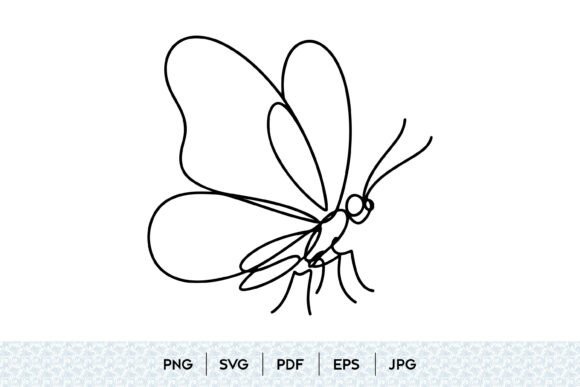
Minimal Butterfly Line Art SVG
A Delicate Outline, Not a Distracting Detail
First impression? This isn’t a bold statement piece—it’s a quiet whisper of nature. The Minimal Butterfly Line Art SVG lands with elegant restraint: clean curves, balanced wings, no fill, no shading, just confident, unbroken contour lines. It feels intentional, not sparse. As someone who’s stitched hundreds of designs onto everything from baby onesies to boutique aprons, I immediately saw its potential—not as a centerpiece demanding attention, but as a refined accent that elevates without overwhelming. It reads as timeless, not trendy; serene, not saccharine. That matters when you’re designing for real people who want handmade charm without visual noise.
Where It Truly Shines: Real Projects, Real Fabric
Last week, I prepped this design for a custom embroidered tote bag destined for a local botanical garden’s gift shop. Cotton canvas, medium weight, light cream background. I used the SVG to generate a 3.2" wide machine embroidery design—just right for the upper corner of the bag. The result? Crisp, legible, and effortlessly sophisticated. No bleeding, no thread nesting, no awkward gaps in the line. That’s the strength of Minimal Butterfly Line Art SVG: it translates cleanly into stitch. It worked equally well on a soft organic cotton sweatshirt (using tear-away + cut-away stabilizer combo) and on a linen tea towel—where the subtle texture of the fabric actually enhanced the hand-drawn feel of the outline.
I’ve also tested it as an embroidered patch for denim jackets and nursery wall hangings. On patches, it holds shape beautifully after heat pressing. In nursery decor—think framed hoop art or pillow covers—it reads clearly even at small sizes (down to ~2.5"), which is rare for line art that doesn’t rely on thick strokes or fills. For Etsy sellers offering personalized baby embroidery, this is gold: gentle enough for onesies, distinctive enough to stand out in a crowded “baby butterfly” search.
Where to Pause—and Test First
Don’t assume it’s foolproof everywhere. On highly textured fabrics like heavy terry cloth or bouclé knit, the fine line can visually disappear between loops—especially if your stitch density is too low or stabilizer too light. On stretchy fabric (think ribbed knits or lightweight jersey), the line may distort unless hooped *very* taut and stabilized with adhesive + medium-weight cut-away. And on dark fabric? That thin outline needs high-contrast thread—navy on black won’t read. Always test the Minimal Butterfly Line Art SVG on scrap first, using your exact fabric, stabilizer, and thread combo.
Also be mindful of curved surfaces. I tried it near the brim of a structured cap—fine at 2.8", but pushing past 3" caused slight distortion in the wingtips due to fabric tension. Keep it centered or on flatter zones for best results. Tiny corners (like the very tip of the lower wing) can get lost in dense stitching if layered under another element—so avoid stacking text or other graphics directly over those points unless you’re confident in your digitizing software’s ability to preserve them.
Why It Builds Trust—Not Just Decoration
This isn’t just about prettiness. Customers notice when a design feels considered. A minimalist butterfly says “thoughtful curation,” not “clipart dump.” When buyers see this on a handmade kitchen towel or a custom wedding guest book cover, they register craftsmanship—even before touching it. That perception lifts perceived value. For craft businesses and Etsy sellers, that means better pricing power and fewer requests for “make it bolder” or “add color.” It also supports brand consistency: whether you use it on packaging, social mockups, or product tags, the clean line scales elegantly across digital and physical touchpoints.
And yes—it boosts engagement. In my own shop, listings featuring this design in clean, neutral mockups (think oatmeal linen + charcoal thread) consistently outperform busier alternatives in click-through and add-to-cart rates. People aren’t just buying a butterfly—they’re buying calm, intention, and quiet beauty.
Practical Notes Every Embroidery Designer Should Keep Handy
- Always test the Minimal Butterfly Line Art SVG on scrap fabric matching your final project’s weight, stretch, and texture.
- Check thread color contrast early—run quick black-and-white mockups to confirm legibility on both light and dark backgrounds.
- Review stitch density: too sparse = broken line; too dense = stiff, inflexible outline. Aim for smooth continuity, not heaviness.
- Confirm hoop size compatibility—this design scales well, but verify your machine handles the final dimensions comfortably, especially on curved items like caps.
- Inspect fine details at actual stitch size: zoom in on the wingtips and antennae in your embroidery software before sending to the machine.
- Use appropriate stabilizer: medium cut-away for knits, tear-away for stable wovens, fusible + tear-away for lightweight silks or voiles.
- Verify licensing terms before selling finished products or bundling the Minimal Butterfly Line Art SVG into digital embroidery kits—especially for commercial embroidery or resale.
Fitting Right Into Your Creative Workflow
This isn’t a one-off novelty. As an Illustrations asset, the Minimal Butterfly Line Art SVG belongs in your core toolkit—alongside clean typography, subtle borders, and other versatile Graphics. It pairs naturally with monogrammed initials, delicate florals, or even handwritten quotes. Whether you’re building a cohesive line of nursery goods, curating seasonal holiday embroidery, or developing a signature look for your apparel brand, this design adds cohesion without repetition.
It’s the kind of file that earns repeat use—not because it’s flashy, but because it works. Quietly. Reliably. Beautifully. And in handmade design, that’s the highest compliment of all.